
Referierende
-
 Sophia Achab University of Geneva and University Hospitals of GenevaSophia Achab
Keynote:
Navigating the Digital Age: Internet-Related Disorders and the Mental Health of Youth in a Changing Society
In an era defined by rapid technological advancement and societal transformation, the mental health of children and adolescents stands at a critical juncture. The intersection of societal change and individual development presents unique challenges, particularly as digital environments reshape social interactions, identity formation, and psychological well-being. This keynote address draws on Sophia Achab’s expertise in Internet-related disorders, including her advisory roles with the World Health Organization (WHO), the Swiss Federal Office of Public Health (OFSP), and the Council of Europe. Her work has been instrumental in shaping policies and clinical guidelines to address the rising prevalence of problematic internet use, gaming disorder, and social media addiction among youth. By examining the interplay between digital engagement, societal expectations, and developmental vulnerabilities, this talk will highlight the broader trends, challenges, and future directions in child and adolescent psychiatry. It will also showcase how international collaboration—supported by organizations like the WHO, OFSP, and Council of Europe—can inform evidence-based interventions and public health strategies. The discussion aims to inspire clinicians, researchers, and policymakers to foster resilience, promote healthy digital habits, and design interventions that align with the evolving needs of young individuals in a rapidly changing world.
About Sophia Achab:
Achab Sophia is Deputy Addiction Division Director, ReConnecte Facility Director at University Hospitals of Geneva (HUG) and Director of WHO Collaborating Centre for Training and Research in Mental Health, Psychological and Sociological Research Unit, Department of Psychiatry, Faculty of Medicine, Geneva University (UNIGE).
She acts as Advisor in various global Panels on public health issues, policy making and capacity building in addictive behaviors, for Swiss Federal Office of Public Health, for Swiss regional public health entities, Council of Europe (Pompidou Group) and for World Health Organization (WHO).
She is Lancet Commissionner and workstream co-Lead at Lancet psychiatry- Global Action on Problematic Internet Use; and Pompidou Group Council of Europe Expert on Public health issues and risks of online platforms in youth. Her Research line is "Populational and clinical perspectives of addictive behaviors* and she contributed to the efforts leading to their inclusion in ICD-11, including directing Swiss Field Testing of ICD-11 criteria for addictive disorders (WHO research project on their utility, feasibility and added value).
She runs the Swiss pioneering treatment Centre ReConnecte specialized in addictive behaviors (Gambling, gaming, shopping, work..) since 2007 at University Hospitals of Geneva in Switzerland.
She drives advocacy and scientific efforts tackling Gender and Addiction from public health and clinical dimensions to leadership challenges. Co-Founder and co-Chair of Women and Addiction Interest Group (WAIG) at ISAM, Member of transcultural network putting women on the scientific agenda at ISSBA, Member of Equity Commission at Faculty of Medicine (UNIGE) and Equity delegate of Medical executives at HUG.
She has been invited as faculty by international universities and major scientific societies and she has been invited to join different scientific boards in the field of Addiction Medicine, Mental Health and Global Health:
-Chair, (National Committee Switzerland, World Association on Dual Disorders WADD; Addictive Behaviors Scientific Section, European Psychiatric Association EPA)
-Board of Directors (International Society of Addiction Medicine ISAM; Geneva Health Forum GHF; International Society for the Study of Behavioral addictions http://issba.elte.hu/ ISSBA) -
 Johan Bjureberg Karolinska Institutet SwedenJohan Bjureberg
Keynote:
Emotion Regulation in Transdiagnostic and Personalized Treatment
Emotion regulation is increasingly recognized as a core transdiagnostic mechanism shaping the onset, maintenance, and treatment of youth mental health problems. In this presentation, Prof. Bjureberg will first provide an integrative overview of emotion regulation, drawing on recent theoretical advances that conceptualize it as a dynamic system in which biological predispositions, environmental influences, beliefs about emotion, and learning processes jointly shape regulatory abilities and multistage regulatory processes. Repeated failures within this system contribute to diverse forms of psychopathology across diagnostic categories.
Prof. Bjureberg will then review evidence from psychological interventions, demonstrating that emotion regulation frequently functions as a potential mechanism of change, particularly in treatments grounded in established emotion regulation theories. Building on this mechanistic foundation, he will present examples of how emerging transdiagnostic treatments can be personalized through prediction models based on repeated measurement of emotion regulation and related constructs, helping identify individuals who may benefit from intensified or additional support—thereby improving resource allocation and tailoring care to individual needs.
Finally, Prof. Bjureberg will discuss emerging opportunities for real-time, precision mental health care, including just-in-time adaptive interventions that leverage momentary data to deliver support during critical emotional states. Together, these developments illustrate how emotion regulation–based frameworks can inform scalable, personalized, and mechanism-driven treatments for youth mental health.About Johan Bjureberg:
Prof. Bjureberg is an Associate Professor in the Department of Clinical Neuroscience at Karolinska Institutet, Sweden. He earned his MSc in Psychology from Uppsala University and his PhD in Clinical Psychology from Karolinska Institutet. Prof. Bjureberg completed a postdoctoral fellowship in the Department of Psychology at Stanford University, USA. His research focuses on understanding and preventing mental health problems, self-injury, aggression, and suicide, particularly when these behaviors are underpinned by emotion regulation difficulties. He leads a research group working at the intersection of clinical, experimental, and epidemiological science. He has contributed theoretical work on emotion regulation and has developed several face-to-face and internet-delivered emotion regulation treatments for various conditions and behavioral problems. He has a special interest in how emotion-regulation–based frameworks can inform scalable, personalized, and mechanism-driven treatments for youth mental health.
-
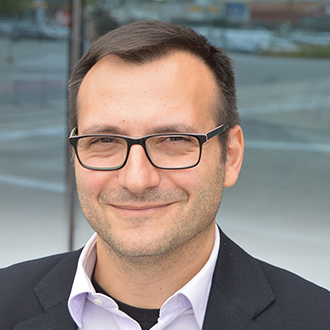 Andrea Raballo Organizzazione Sociopsichiatrica Cantonale and Univerità della Svizzera italianaAndrea Raballo
Keynote:
From early vulnerability to future care: integrating developmental, intergenerational, and AI-augmentation perspectives in Youth Mental Health (YHM)
Mental disorders often originate in early life and are transmitted across generations, yet most lifelong trajectories are decided during the transition from adolescence to adulthood. This keynote will outline how developmentally staged, family-inclusive, and prevention-oriented care systems can interrupt these cycles, and how ethically governed AI-augmentation and large language models can help us deliver personalised, scalable early intervention without losing the human therapeutic alliance.
About Andrea Raballo:
Andrea Raballo, MD, PhD, is Full Professor and Chair of Psychiatry at the Università della Svizzera italiana (USI), Lugano, and Head of Academic Training and Research at the Cantonal Sociopsychiatric Organization (OSC). A specialist in developmental psychopathology, he is dedicated to understanding early vulnerability in childhood and adolescence, the intergenerational transmission of mental health risks, and the design of innovative, preventive systems for youth mental health.
Throughout his career, he has focused on bridging child-adolescent and adult services to intercept and redirect adverse developmental trajectories, particularly during the critical transition to adulthood. Previously Onsager Associate Professor of Psychopathology and Development at the Norwegian University of Science and Technology (NTNU), postdoctoral researcher at the University of Oslo’s NORMENT Centre, and Associate Professor at the University of Perugia, where he led early intervention initiatives, he has pioneered phenomenological approaches to early detection, clinical staging, and transdiagnostic prevention.
As a board member of the International Early Psychosis Association (IEPA) and co-chair of the European Psychiatric Association’s Section on Prevention of Mental Disorders, he advocates for developmentally staged, family-inclusive care models.
His current work explores ethical AI-augmentation, including large language models and digital phenotyping, to enable scalable, personalized early interventions while safeguarding the therapeutic alliance. Co-founder of USI’s REMEDI Lab for rethinking mental health through clinical-data intelligence, he envisions integrated systems that combine developmental science, intergenerational perspectives, and responsible digital tools to mitigate the long-term burden of mental disorders in young people. -
 Pamela Collins Johns Hopkins Bloomberg School of Public HealthPamela Collins
Keynote:
Expanding mental health care for adolescents globally: What can we learn from lessons in partnership, training, and mental health care integration for youth with complex needs?
Ensuring that sustainable and effective mental health services are available for children and adolescents is a growing priority around the world. The Second Lancet Commission on adolescent health and wellbeing issued a renewed call to action, emphasizing accountability to safeguard the health and wellbeing of adolescents worldwide. Among the most urgent challenges identified is the mental health crisis facing young people in many settings. Suicide remains a leading cause of death among adolescents, while depression, anxiety, and trauma-related conditions are increasingly prevalent. Social, commercial, and environmental determinants ranging from urban living conditions, gender norms, economic pressures, unsafe digital environments, and the climate crisis contribute to young people’s mental health outcomes in diverse and complex ways.
Yet, globally, adolescent mental health remains underprioritized in policy and financing. Moreover, where resources are scarce, little guidance exists on how to support service implementation. This presentation will review global determinants of adolescent mental health and examines how integration of mental health interventions in novel settings can help support youth mental health and wellbeing.About Pamela Collins:
Pamela Collins is a Bloomberg Centennial Professor, chair of the Department of Mental Health, and director of the Johns Hopkins Center for Global Mental Health at the Bloomberg School of Public Health. She works at the intersections of global mental health, HIV care, and urban health for adolescents. Her current projects integrate psychosocial interventions into routine HIV care for adolescents living with HIV and into community-based care with faith-based providers in sub-Saharan Africa, and she explores urban responses to youth mental health needs in the U.S. Through leadership at the US National Institute of Mental Health, she launched research initiatives to build the evidence base for integration of mental health interventions into HIV care, primary care, maternal health services, and chronic disease care in low- and middle-income countries. Prof. Collins has served as a member of the U.S. National Advisory Mental Health Council. She was a commissioner for the Lancet Commission on global mental health and sustainable development and more recently, the second Lancet Commission on adolescent health and wellbeing. She is a member of the U.S. National Academy of Medicine. Prof. Collins has a joint appointment at the Johns Hopkins School of Medicine Department of Psychiatry and Behavioral Sciences.
Prof. Collins earned her MD from Weill Cornell Medical College, an MPH from Columbia University Mailman School of Public Health, and a BA from Purdue University. She was a postdoctoral fellow in the Columbia University Department of Psychiatry and Harvard University Department of Social Medicine.